Daily AI and Tech Digest
AI and tech digest for 2026-11-17
Today's digest combines source-linked AI news, broader technology headlines, and recent research papers. The finance/stocks banner below separates market headlines from the AI and research sections, so students, teachers, and collaborators can scan each lane clearly.


Latest AI and tech news
Headline-only links to original sources, grouped for quick scanning.
-
News 01 | 2026-11-17
Introducing GPT-6.2 Astra and Sol
Source: OpenAI News
Track: AI
-
News 02 | 2026-11-17
Introducing ChatGPT for Sales
Source: OpenAI News
Track: AI
-
-
News 04 | 2026-11-17
Nvidia says it doesn’t plan to reappoint Jensen Huang as CEO
Source: TechCrunch
Track: AI/Tech
-
News 05 | 2026-11-17
Amazon and Google will together own nearly 30% of Anthropic after its IPO
Source: TechCrunch
Track: AI/Tech
-

News 06 | 2026-11-17
SEC reportedly investigating Nvidia amid Huang exit
Source: TechCrunch
Track: AI/Tech
-
News 07 | 2026-11-17
Google joins the tech outage trend by announcing it’s not having one
Source: TechCrunch
Track: AI/Tech
-

News 08 | 2026-11-17
Model ML raises $250M to automate investment banking grunt work
Source: TechCrunch
Track: AI/Tech
-

News 09 | 2026-11-17
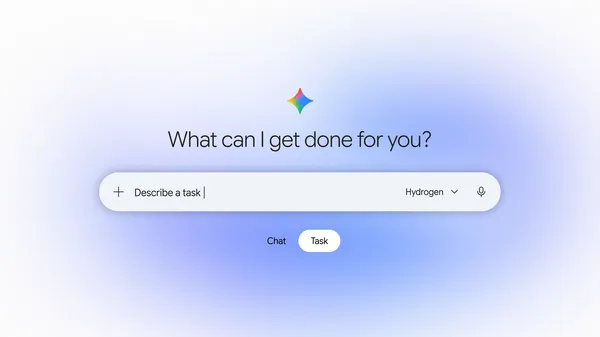
Google expands access to Gemini Tasks, which can help with calls, purchases
Source: TechCrunch
Track: AI/Tech
-

News 10 | 2026-11-17
Google to keep Gemini chats for 2 months, up from 72 hours, even with history off
Source: TechCrunch
Track: AI/Tech
-

Market 01 | 2026-11-17
Dow Jones Futures: Techs Rise As Nvidia Beats Views, Says This On Jensen Huang; Target, Anthropic IPO Ahead
Source: Yahoo Finance Markets
Track: Markets
-
Market 02 | 2026-11-17
Bill Ackman’s $14 billion bet beyond the Magnificent 7
Source: Yahoo Finance Markets
Track: Markets
-

-
Market 04 | 2026-11-17
Update: US Equity Indexes Retreat Amid a Broad-Based Sectoral Sell-Off
Source: Yahoo Finance Markets
Track: Markets
-

Market 05 | 2026-11-17
Stock Market Today: Dow Dives, Nvidia Falls Amid This Jensen Huang Offer; Cyber Plays Mixed
Source: Yahoo Finance Markets
Track: Markets
-

Market 06 | 2026-11-17
Dow Drops Nearly 860 Points as Stock Market Selloff Deepens Ahead of Nvidia Earnings
Source: Yahoo Finance Markets
Track: Markets
Recent research papers
Recent arXiv submissions selected for topic variety, with recent repeats filtered out when enough new papers are available.
-
Paper 01 | 2026-11-16
ScenarioForge: Resource-Grounded Generation and Execution Validation of Cyber Exercises
Authors: Jaime C. Acosta, Anantaa Kotal, Aritran Piplai
Topics: cs.CR, cs.AI
Cyber-range and capture-the-flag scenario construction remains labor-intensive because authors must coordinate infrastructure, vulnerable services, attack paths, artifacts, and success conditions. LLMs can propose detailed exercises, but plausible descriptions do not guarantee deployable software or...
-
Paper 02 | 2026-11-16
Latent Lattice Language Models
Authors: Shivam Duggal, Zongze Wu, William T. Freeman, Antonio Torralba, Richard Zhang, Eli Shechtman
Topics: cs.LG, cs.AI, cs.CL
Language models typically increase per-token computation through deeper or looped layers and latent reasoning steps, while richer residual connections improve information flow across layers. We instead increase computational capacity: the number of active computational...
-
Paper 03 | 2026-11-16
Beyond Job Titles: Interpreting Early-Career Job Advertisements with Sparse Autoencoders and Semantic Clustering
Authors: Yisong Cao, Leah Kim, Brian Wright, Ali Rivera
Topics: cs.CL
Job titles and job descriptions alone provide limited insight into how technical roles differ in a changing job market. To assess how such roles differ in their work and industry applications, we design and...
-
Paper 04 | 2026-11-16
ViRA: Toward Ultra-High-Resolution Visual Agents via Cross-Input Relative Policy Optimization
Authors: Huawei Lin, Jinting Liu, Tongyan Wang, Xuyang Chen, Ruihua Shi, Zhichao Xu, et al.
Topics: cs.CV, cs.AI
Visual agents answer questions about ultra-high-resolution photos by zooming into the relevant regions. However, existing agents often answer from common sense instead of reading the evidence. Reinforcement learning (RL) on the final answer cannot...
-
Paper 05 | 2026-11-16
ONAM: Fitting Orthogonal Neural Additive Models for Post-Hoc Interpretability of Black-Box Predictions
Authors: David Köhler, Matthias Schmid
Topics: stat.ML, cs.LG, stat.ME
Modern machine learning models, such as artificial neural networks, achieve high predictive performance through increasingly complex black-box architectures, limiting their use in settings where transparency, interpretability, and fairness are required. Here we present the...
-
Paper 06 | 2026-11-16
When Tool Names Are Not Identities: Measuring Provider Misbinding in MCP-Based AI Agents
Authors: Zeynab Anbiaee, Sajjad Dadkhah, Ali A. Ghorbani
Topics: cs.CR, cs.AI
Large language model (LLM) applications increasingly act as agents that select and invoke external tools. The Model Context Protocol (MCP) standardizes this interaction by allowing clients to compose tools advertised by multiple servers. However,...